New Cootings Machine
Klara and the SunThe New Cootings Machine is a replacement for the first Cootings Machine, distinguished by its yellow body, greater dimensions, and stronger capacity to produce pollution. Its reappearance after Klara and the Father destroy the original turns a seemingly successful act of sabotage into a temporary reprieve: the pollution source has returned, and Klara realizes that the Sun has not acted as she expected.
Appearance and Operation
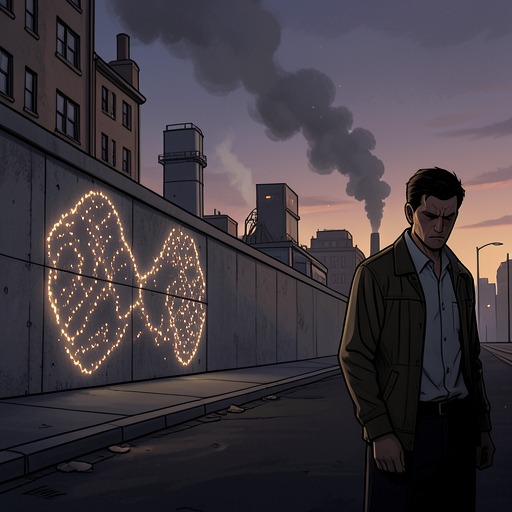
The original machine first announces itself through the preparations around it. Overhaul men cordon off a section of street with wooden barriers, drill and break the ground, and then bring in a machine that emits smoke through three roof funnels. The smoke thickens from small white puffs into a continuous dark cloud, obscuring the sky and marking the windows with dirty dots. The episode establishes the machine’s identifying features—its three funnels and the name Cootings on its body—which later allow Klara to recognize it again.
When Klara encounters the replacement, she sees it through a gap between vehicles, still enclosed by the overhaul men’s barriers and pumping pollution from its three funnels. Only the beginning of its name, C-O-O, is visible, but the machine’s form is unmistakable. Its body is a different shade of yellow from the original, its dimensions are somewhat greater, and it produces more pollution. The modest differences in color and size register a decisive change in scale: this is not the old machine restored, but a more powerful successor.
The First Machine and Its Effects
Before the original arrives, the preparations make the impending disruption visible and audible. Taxi drivers object to the street closure with their horns; drilling frightens the Artificial Friends in the store window, and Rosa covers her ears when the noise becomes severe. A customer points to the overhaul work while warning about pollution. Klara initially assumes the machine might be intended to fight pollution, but Rex tells her it is designed to create more of it.
The smoke then alters the store’s immediate environment. From her position near the magazines table, Klara watches the street divide into visual panels: barriers, part of a taxi, a traffic signal, and a bird’s outline remain discernible through the haze, while a runner appears to change size and direction as he crosses between panels. Eventually the smoke erases the visible gap of sky and soils the window. The two boy Artificial Friends maintain their display postures, though one raises an arm across his face; the Manager steps up to reassure him and tells customers the disruption should last only a few days.
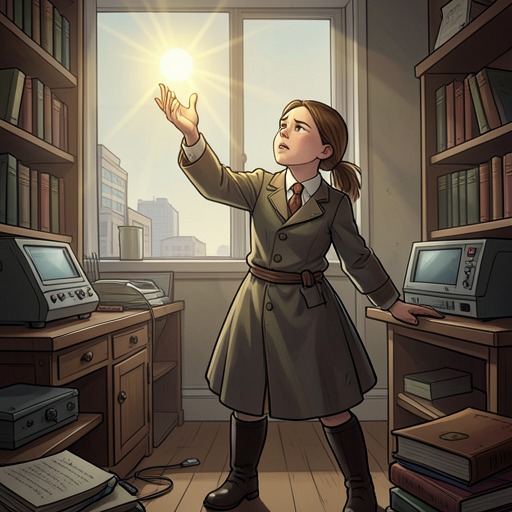
It lasts four continuous days. Daylight becomes nearly nightlike, and the Sun’s patterns disappear from the store’s floor, alcoves, and walls. They return faintly on the second bad afternoon, but Klara still worries about receiving enough nourishment. By the fourth day she feels herself weakening; when customers are absent, her posture sags until Rex touches her arm to remind her to stand straight. The machine’s effects therefore extend beyond visible pollution: it dims the sunlight on which the Artificial Friends depend and unsettles the store’s ordinary routines.
Destruction and Return
The original machine’s disappearance briefly appears to resolve the crisis. One morning the grid is raised, and both the machine and its specially cordoned-off section have vanished. The pollution clears, the blue sky returns, and sunlight pours into the store. Traffic moves smoothly again, and passersby seem cheerful. Klara, who had worried that the smoke might prevent Josie from returning to the store, initially imagines that the restored brightness could bring her back; by mid-afternoon she recognizes this hope as unreasonable and turns her attention elsewhere.
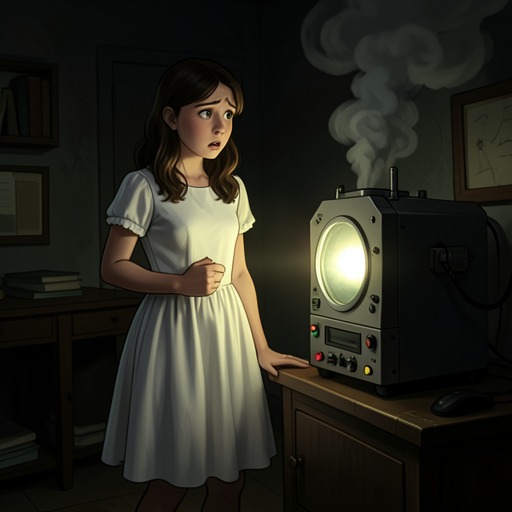
Later, Klara explains that destroying the machine was the real reason she asked to be driven into the district near her old store. She identifies it by the Cootings name and three funnels, and says it must be destroyed. The Father explains the proposed method: the machine contains a middle-market Sylvester broad generation unit, built to withstand dust, smoke, and rain but vulnerable to a high-acrylamide substance such as P-E-G Nine solution. If introduced into the system, the solution would rapidly polymerize and likely cause terminal damage. This technical vulnerability makes the machine’s destruction possible, but its later replacement shows that disabling one unit cannot prevent another from being deployed.
Reappearance and Significance
In the car, Klara sees the New Cootings Machine through traffic while the Mother is discussing Rick’s prospects with Helen and Josie. The Mother suggests that other options might exist for Rick; Josie questions whether those would be colleges her mother would allow her to attend. As the car passes the machine, the Mother notices the pollution mist on the windshield and mutters about how its operators are allowed to get away with it. The scene places the machine’s pollution alongside a family conversation about education and the different futures facing Josie and Rick.
Looking back through the rear windshield, Klara sees the New Cootings Machine become hidden behind other vehicles. She understands why the Sun has not acted, and her posture may slump as she lowers her head. Josie notices Klara’s distress and reminds the Mother that Klara has already been upset by the store’s removal, urging a return to happier conversation. The replacement thus carries a consequence beyond the renewed smoke: it overturns Klara’s expectation that the Sun’s help would follow the destruction of the first machine. Its return makes the limits of that hope materially visible, while the vehicle traffic that soon conceals it offers no resolution—only a pollution source continuing out of sight.